
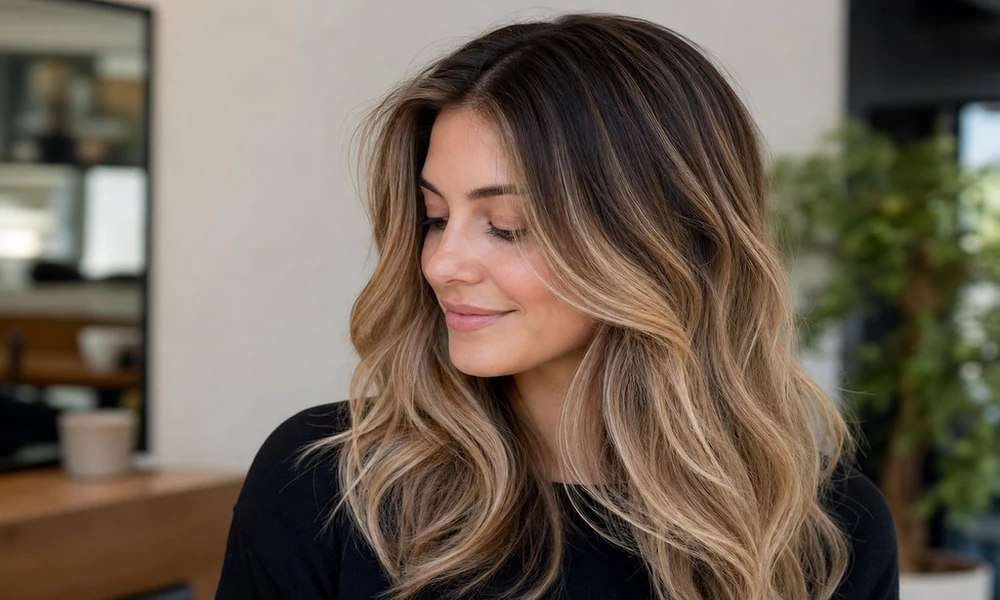
Balayage is a technique that can be used to salvage overgrown highlights. This technique involves using a hand-painted coloring method to blend out harsh lines, add dimension and soften the appearance of old highlights. Rather than coloring every section of hair from root to tip, color is only applied where light would naturally hit. The technique works well if you’re looking to conceal a blunt line of regrowth or dry, faded ends on a darker base. Here’s how to go about using balayage to fix your highlights.
Soften a Visible Strip of Regrowth
Balayage can be a great way to hide old highlights when your roots have grown out too far and left you with a thick line of regrowth. Typically this happens when you have old foils that are very noticeable under your natural hair, as well as visible blonde strips around your hairline and temples. To fix this, a colorist will add some highlights higher up, along with a root melt.
The root melt uses a color similar to your root color, which softens the transition between your new growth and old blonde. You can also add some fine lowlights through the blonde areas, particularly near the part line where every stripe shows up when the lights are turned on. The aim is not to go back to icy blonde, but to create a softer look that will allow you to grow your highlights out more gradually.
This should include a face-framing section around the front to keep things looking light, and then the rest of your hair can be more diffused. Don’t do this if your hair feels weak when wet, breaks around the elastic line, or has been lightened several times already. There might still be some more bleaching to do, so you should wait for your hair to heal first; Trademark Salon’s page on what is balayage covers that route.
Correct Flat Brunette Color and Brassy Ends
If you are wearing a box-dyed brunette color, it might look darkest at the bottom, where the color has built up on top of itself. In direct sunlight, it might look like a solid block of brown from your roots to your shoulders. The color can also appear warmer around the edges, but remain dark at the back of your neck.
Hand-painted lighter strands can help add depth, but this is something you’ll want to have realistic expectations about. Dark artificial pigments don’t always lift perfectly in one session. A colorist may start with a few pieces of caramel or light chestnut and add a gloss to make everything feel more uniform. They can also add a few lowlights to help blend the highlighted areas into the rest of the hair, preventing them from looking patchy.
This type of correction is most useful if you have an existing red/orange band, a lot of dark dye buildup, or patchiness from old home colorings. Your colorist may need to get rid of some of the old color before applying any bright shades. Make sure to tell your colorist what colors you’ve used in recent months, including any quick root touch-ups you’ve done at home, as this will affect your options.
Tone Faded, Overly Warm Ends
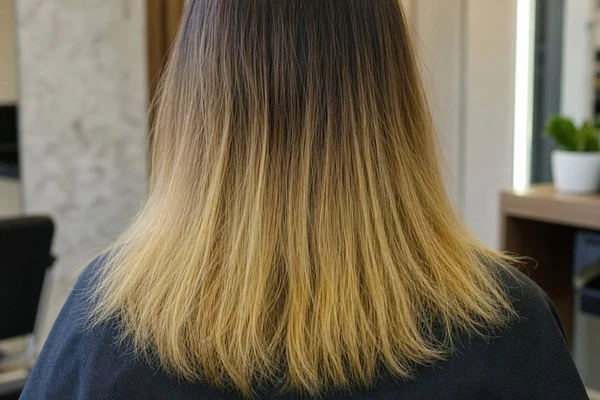
Another common scenario is when your ends become too warm following an older color treatment. The roots and mid-lengths can look good, but the last few inches of hair might be too brassy, or have an unusual yellow tone when paired with a white shirt. Chlorine can also cause the hair to look dull and even have a slight green tint (Scientific American covers this at www.scientificamerican.com/article).
In this case, balayage might be used in the form of a gloss rather than more lightening. A gloss can tone down the visible warmth and add shine, while a few new painted pieces can help blend the hair from the mid-lengths to the tips.
Porous ends can absorb color very quickly, so the technician will likely apply the product to healthier parts of your hair first and then monitor the ends during the process. If your ends are frayed, this should also be addressed. Dull, split ends can make your color look coarse, especially if the lightest strands end abruptly at a dry line.
When you’ve done that, follow up with color-safe shampoo and minimize use of high heat so your toner doesn’t fade out prematurely.
Purple or blue shampoo might work for brassiness, but too much of this product could make very porous blonde strands look dull or patchy.
Prepare for Your Appointment
Make sure to take a few pictures in natural lighting, including one where your hair is down and another where it’s pulled back. Make sure to ask about what kind of services will be included in the appointment, including a root melt, gloss, lowlights, and any color stripping that may be necessary. Also, leave enough time to do a strand test if you’ve had lots of dark color in your hair recently.
